There’s something unforgettable about watching your little one slide down the mountain for the first time… tiny helmet, oversized smile, maybe a scream…
For most families, the journey from wobbly first turns to confident cruising begins the same way ours did: borrowing gear and seeing how it goes.
At our mountain, the locally-owned rental shop keeps a few small kids’ skis available for free every morning. It’s a fantastic way to dip your boots in the snow without commitment.
But after a few weekends of chasing West around the bunny hill, we realized that if we wanted to do lessons (and eventually ski camp), it was time for him to have his own properly sized pair—something that would fit right, feel comfortable, and help him build skills safely.
If you’re in the same spot, wondering whether to rent, borrow, or finally buy, this guide breaks down exactly how to choose your toddler’s first skis, with simple steps and an easy size chart to get you started.
Decide If You’re Ready to Buy
For ages 3–5, most families start with borrowed or rental skis until their child shows consistent interest. Once your kiddo starts asking when they can ski again, or you’re signing them up for ski school, it’s a good time to invest in a pair.
Buying has its perks:
- You can ensure the fit is just right (rental or borrowed gear can be hit-or-miss).
- You’ll avoid mid-season availability issues at rental shops.
- Kids build confidence faster when they’re familiar with their own gear.
That said, if you only ski a couple of days a year, renting still makes sense, especially as toddlers grow so quickly.
Use Height and Weight (Not Just Age) to Find the Right Size
Ski sizing for kids isn’t one-size-fits-all. The best ski length depends on your child’s height, weight, and ability level.
For most beginners, skis that reach somewhere between the chest and nose are ideal.
Here’s a simplified version of a kids’ ski size chart for ages 3–5:
| Height (inches) | Weight (lbs) | Beginner Ski (cm) | Experienced Ski (cm) |
| 37″ | 34 | 70 | 80 |
| 40″ | 37 | 80 | 90 |
| 43″ | 42 | 90 | 100 |
| 45″ | 46 | 95 | 105 |
| 47″ | 50 | 100 | 110 |
Pro tip: Don’t go more than 10 cm longer than their current recommended size. Oversized skis can make learning harder and more frustrating.
Size Up or Down Strategically
A few general rules make ski sizing simpler:
Size Up When…
- Your child likes to ski fast or keeps up easily with other kids.
- They weigh above average for their height.
- You want some room for growth (within 10 cm).
Size Down When…
- Your child is cautious or brand new to skiing.
- They’re on the lighter side for their height.
- They prefer short, quick turns instead of straight, fast runs.
The key: it’s always better to have skis your child can control confidently than ones they can “grow into” but can’t maneuver yet.
Choose a Ski Type That Matches Their Learning Style
For most toddlers and young kids, an all-mountain ski is perfect: it’s versatile, forgiving, and easy to handle on groomed runs.
If your child shows an early interest in something specific (like park features or racing), you can eventually fine-tune:
- Twin tips: Great for freestyle play and skiing backward (not essential, or recommended!, for first-timers).
- Flat tails: Better for developing carving fundamentals.
But for ages 3–5, simplicity is your best friend. Prioritize stability and lightweight construction over technical performance.
Let Them Pick the Color (Seriously)
If you’ve ever tried to convince a three-year-old to wear the “wrong” socks, you already know this one. The fastest way to get buy-in? Let them help choose their skis.
Whether it’s dinosaurs, mountains, or their favorite color, the right design can make your child want to ski. Don’t stress about “boys” or “girls” graphics. Most kids’ skis are unisex, and the only thing that matters is that they’re excited to click in.
Don’t Forget About Boots and Bindings
Bindings should match both your child’s weight and ability level. If your little skier is already at the top of the DIN range (the tension setting that controls how easily skis release), it may be time to upgrade.
And fit matters most…comfortable boots can make or break their first ski experience. Make sure toes can wiggle a bit, and heels stay snug without pinching.
Think About How Long You’ll Use Them
If your child skis frequently, buying their own gear can save money in the long run. For fast-growing toddlers, used demo skis are a fantastic middle ground: affordable, well-tuned, and often barely used.
If you ski only a few weekends per season, seasonal rentals might still be the way to go. Some shops even offer buyback programs where you can trade in outgrown gear.
Final Thoughts: Start Small, Keep It Fun
No matter what skis you choose, remember that the goal at this age isn’t perfect technique: it’s building confidence and joy. Whether you start with a free borrowed pair (like we did) or invest in your own, the best setup is the one that keeps your kid smiling and wanting more.
Because once they catch that first real glide down the hill? You’re raising a lifelong skier.
Trail Tip:
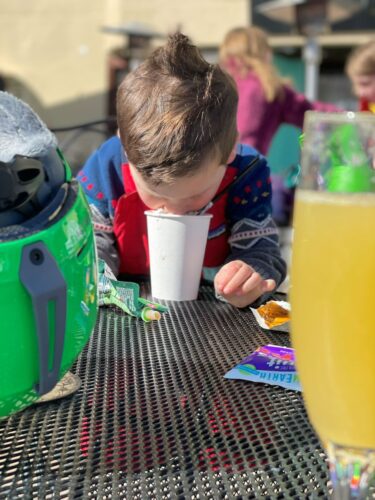
👉 Bring a small treat or thermos of hot cocoa for the first few runs. A happy, warm kid learns faster—and wants to come back again.