If you’ve ever hiked with kids — or, let’s be honest, with anyone — you’ve heard it.
“Are we close yet?”
“How much farther?”
“Is it just around the corner?”
But behind that question lies a simple truth: everyone moves at their own pace.
Distance Over Time — Always
Here’s the golden rule of trail etiquette: answer in distance, not time.
Because your “ten minutes” might be my forty-five.
When someone asks how far it is to the lake, the summit, or the trailhead, resist the urge to guess. Time is relative.
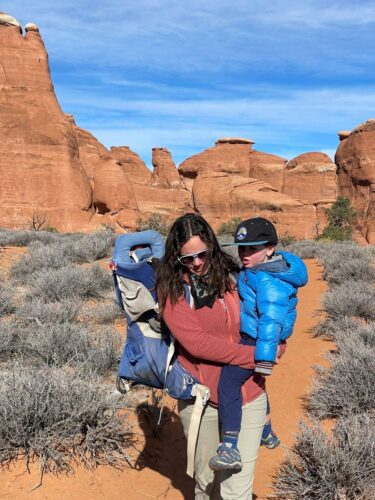
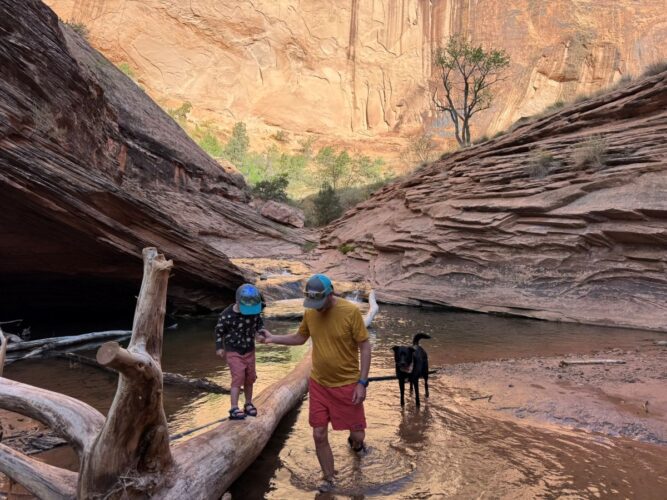
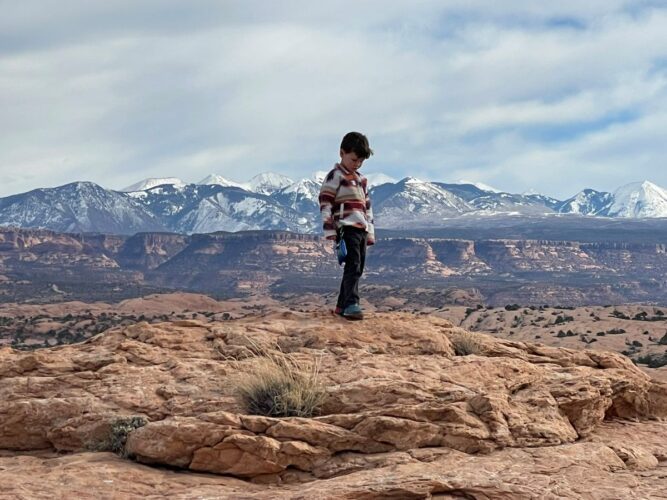
The toddler who needs to stop for every wildflower will make that half-mile stretch last a lifetime. The trail runner gliding by with a polite nod? Their “almost there” doesn’t belong to the rest of us.
That’s why time estimates on the trail are about as useful as a weather forecast from last week.
So instead, give the gift of clarity.
If you know the distance, share it. (“About a mile.”)
If you don’t, be honest. (“Honestly, not sure — but it’s beautiful the whole way.”)
And please — for the love of mountains — don’t sugarcoat it if someone’s red-faced and gasping on a steep climb. (“You’ve got a ways to go… but it’s worth it.”)
It’s not cruelty; it’s compassion. False hope is a heavy pack to carry.
Why It Matters More Than You Think
Hiking isn’t just a physical experience … it’s a mental game. Especially for kids, who are still learning what “a mile” feels like in the real world.
When you tell a child, “We’re almost there,” and fifteen minutes later the summit still isn’t in sight, it erodes trust. What feels like reassurance to you can sound like betrayal to a little hiker working hard to keep moving.
The same goes for adults. When you’re pushing through fatigue, blisters, and elevation, there’s something grounding about honesty. A real answer, even if it’s not the one you wanted, lets you calibrate, conserve energy, and keep your spirits aligned with reality.
And there’s beauty in that honesty.
Being real about the journey honors what hiking is all about: moving through a landscape, not just ticking off a destination.
“Depends on Who’s Asking”
So next time someone asks, “Are we close yet?” — take a deep breath and look around. Notice how far you’ve come, how much trail lies ahead, and how the answer really does depend on who’s asking.
For the trail runner, maybe it’s five minutes.
For the toddler collecting sticks, it’s half a morning.
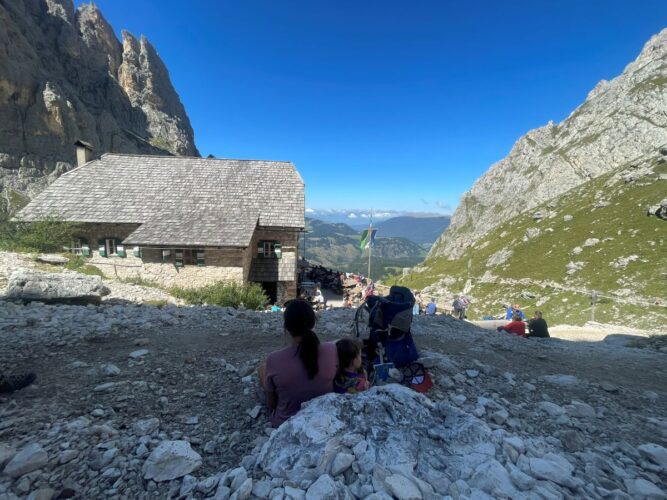
For the family just trying to reach the next shady spot, it might as well be Everest.
And that’s okay.
Because when you stop measuring the trail in minutes and start measuring it in memories, you realize that “how far” doesn’t matter nearly as much as how present you are along the way.
So answer with kindness, not guesses. Offer honesty instead of optimism.