Most hikes with kids come with rules.
Stay on the trail. Watch your footing. Don’t wander. Keep moving.
Slickrock flips all of that on its head.
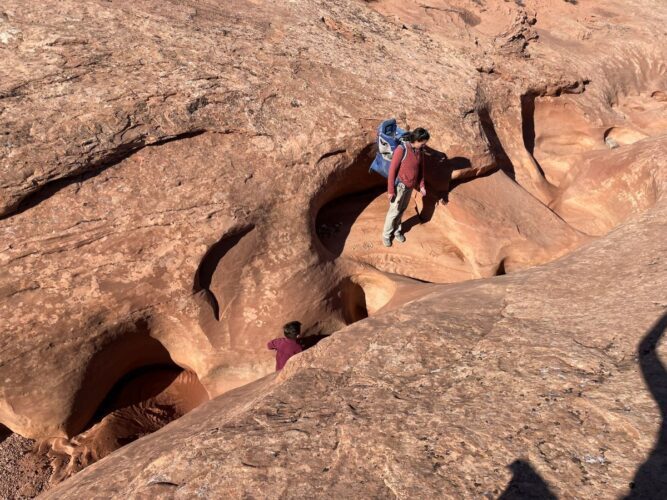
Instead of a narrow path to follow, you’re handed a wide-open landscape of sandstone domes, rolls, and ramps… naturally grippy, endlessly forgiving, and full of possibility. There’s no single right way through it. And that’s exactly why it works so well for kids.
Why Slickrock Is So Kid-Friendly
On slickrock, the trail disappears and suddenly the pressure does too.
There’s no anxiety about staying in line or keeping pace. Kids can climb, wander, loop back, sit down, or scramble up something interesting without feeling like they’re “doing it wrong.” Movement becomes intuitive instead of managed.
For parents, that means fewer corrections and more observation. You’re not constantly redirecting behavior… you’re watching curiosity unfold.
Natural Traction, Natural Confidence
Despite the name, slickrock isn’t actually slippery. The sandstone has incredible traction, especially when dry. For kids, this builds confidence fast. They trust their feet. They test balance. They learn how their bodies move across uneven terrain in a way that feels playful, not risky.
It’s one of the rare landscapes where exploration feels both wild and controlled.
No Lines. No Ladders. No Waiting.
Unlike popular trails with bottlenecks, ladders, or lookout points, slickrock spreads people out. There’s room to roam without waiting your turn or negotiating crowds. That space matters, especially for kids who need freedom more than destinations.
You’re not hiking to something. You’re exploring within something.
Letting Curiosity Lead
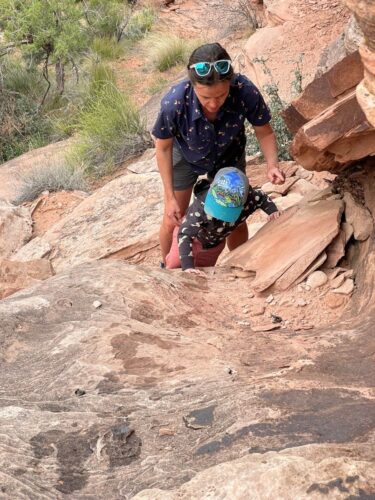
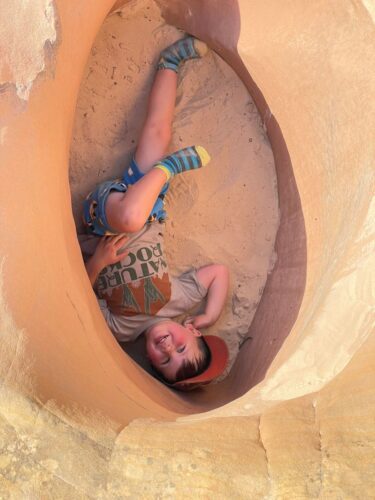
Slickrock invites child-led adventure. Kids choose their route. They decide what’s interesting. They invent games, challenges, and imaginary worlds along the way.
And when children are leading, engagement lasts longer. Complaints fade. Time stretches. The experience becomes about discovery instead of distance.
Know Before You Go
Watch the weather.
Slickrock has excellent traction when dry, but it can become surprisingly slippery when wet. Avoid exploring during or immediately after rain, and be mindful of storm forecasts—there’s little shelter out on the rock.
Footwear matters.
Good grip is key. Closed-toe shoes or trail runners work best for kids and adults. This isn’t the place for smooth-soled shoes or sandals if you plan to climb and scramble.
Sun exposure is real.
There’s very little shade on slickrock. Bring hats, sunscreen, and more water than you think you’ll need—especially for kids who may not notice they’re getting hot until they’re already done.
Boundaries help freedom.
Because slickrock is wide open, it helps to set clear visual or distance boundaries with kids before you start. This gives them freedom to roam while keeping everyone comfortable and connected.
Let go of mileage goals.
This is not a “how far did we go?” kind of outing. Plan for exploration, wandering, and frequent stops. The goal is movement and curiosity… not distance.
Start small.
You don’t need to commit to a long outing. Even 30–60 minutes on slickrock can feel like a full adventure for young kids.
A Different Definition of a “Successful” Hike
On slickrock, success isn’t measured in miles. It’s measured in smiles, confidence, and the quiet satisfaction of moving through a place that doesn’t demand anything from you.
You might cover less ground than planned. Or more. You might never check a map. And that’s okay.
Because sometimes the best trails aren’t trails at all… they’re landscapes that invite play.