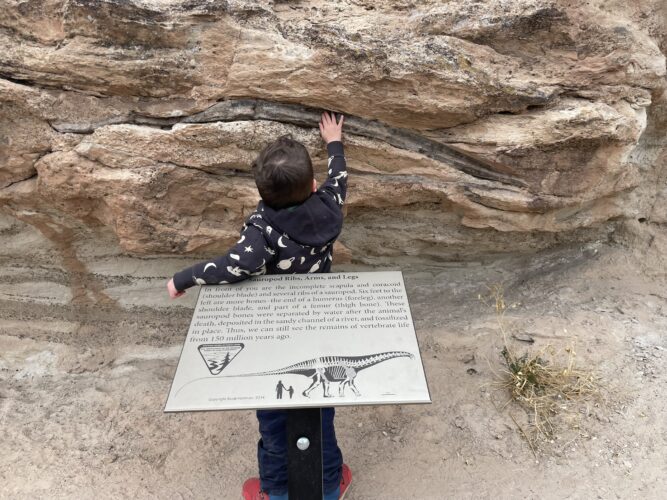
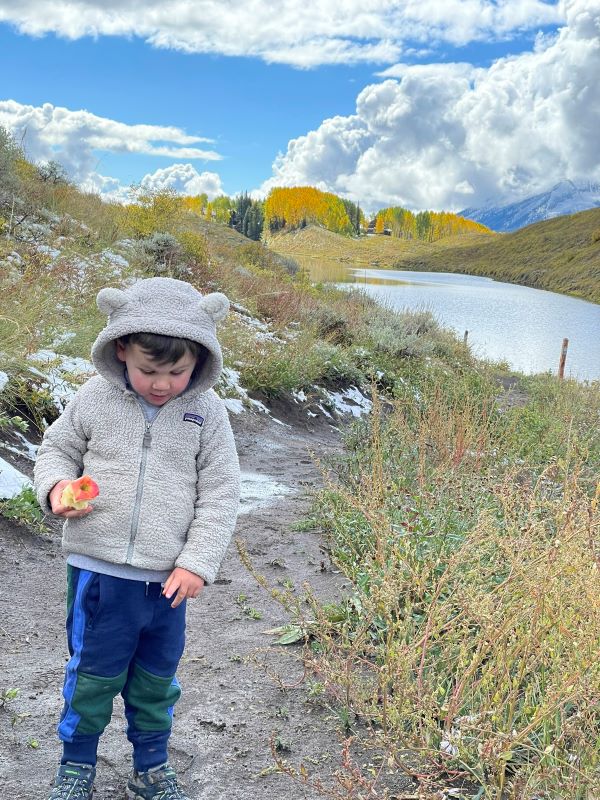
The trail has become West’s favorite classroom. Lately, every step down a leaf-covered path comes with another question:
“Why are the leaves yellow?”
“Why does it get dark sooner?”
“Where do the animals go?”
We joke that he’s in his WHY phase, but really those questions are the building blocks of curiosity.
And what better season than fall to notice how the world shifts and transforms right in front of us?
Why Do Leaves Change Color?
On a recent hike through the aspens, West scooped up handfuls of golden leaves and asked the obvious question: “Why?”
Here’s the simple science: leaves are green in summer because of chlorophyll, the pigment that plants use to capture sunlight and make food. As daylight shortens and temperatures cool, trees start preparing for winter by slowing down their food-making process. The chlorophyll fades, and the other pigments—carotenoids (yellow and orange) and anthocyanins (reds and purples)—finally get their chance to shine.
So when your kiddo picks up a red or yellow leaf, you can explain that it’s the tree’s way of “getting ready to rest.”
Why Are the Days Shorter?
Another observation West made: “Why is it dark already?”
The answer is all about Earth’s tilt. As our planet orbits the sun, different parts lean toward or away from the light. In fall, the Northern Hemisphere tilts away from the sun, giving us shorter days and longer nights. You can make this tangible for little kids by comparing it to tilting a flashlight over a ball… when the ball leans away, less light hits it.
Kids don’t need the full astronomy lesson, just the idea that Earth is turning and tilting, which makes the sun’s time in the sky change throughout the year.
What Happens to the Animals?
West always has a WHY that involves critters: “Where do they go?”
Animals have different strategies for surviving the cold:
- Hibernation: Bears, bats, and some rodents slow their heart rates and body temperatures to “sleep” through the winter.
- Migration: Birds, butterflies, and even some fish head to warmer places with more food.
- Storing food: Squirrels and chipmunks stash away nuts and seeds in tree hollows or underground.
Pointing these out on the trail helps kids connect the dots—when they see a busy squirrel, you can say, “He’s packing snacks for winter!”
Why This Matters for Young Kids
At this age, kids don’t separate science from story. Every WHY is both a request for knowledge and an invitation for wonder. Teaching them about changing seasons isn’t about memorizing facts—it’s about grounding them in rhythms that they’ll carry for life.
A leaf isn’t just a leaf; it’s proof of cycles and change. A shorter day isn’t just bedtime coming sooner; it’s Earth doing its dance. Watching a bird fly south isn’t just fun—it’s part of a grand pattern of survival.
And when you walk a trail with your kid, fielding their never-ending questions, you’re not just explaining the world… you’re modeling that curiosity matters, that asking WHY is always welcome, if not a little tiring.
Simple Ways to Explore Fall
- Collect and press colorful leaves into a scrapbook.
- Mark sunset time on a calendar and watch how it shifts each week.
- Look for busy squirrels or migrating geese and talk about how they’re preparing for the cold.
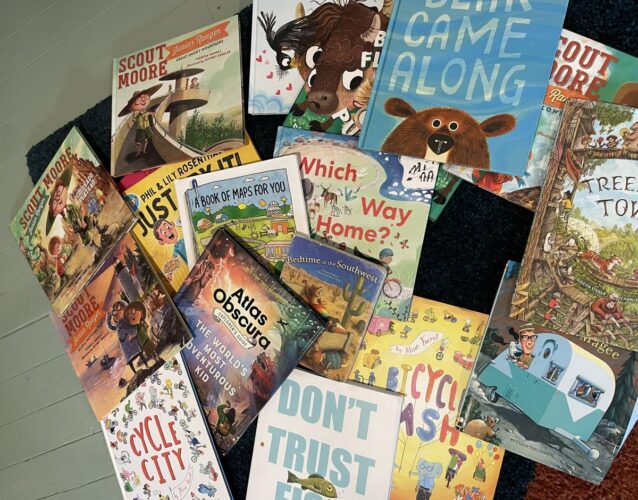
- Read children’s books about hibernation or migration and connect them to what you see outside.
Fall is one big science experiment—visible, tangible, and magical. West’s trail of WHYs reminds us that kids are natural scientists, noticing change before we even think about it. Our role is simple: slow down, join them, and let the season do the teaching.