Screens are everywhere. From restaurant tables to waiting rooms to the backseat of the car, it can feel impossible to avoid them.
And let’s be honest… sometimes, turning on a show or handing over the tablet is the easiest way to get dinner going, a Zoom call finished, or even just five quiet minutes of peace.
At the same time, most parents feel that tug of guilt when it comes to screen time. We’ve all read the headlines about how too much screen use can impact a child’s attention span, sleep quality, and even emotional health.
And we know deep down that hours of mindless scrolling or passive viewing aren’t what we want childhood to be made of.
But here’s the thing: it doesn’t have to be all or nothing.
At our house, we don’t aim to be screen-free. Instead, we’re working toward being screen-intentional.
Why Unstructured Screen Time Can Be a Problem
Childhood is meant to be full of play, movement, and unstructured exploration. When screens become the default—background noise during meals, automatic entertainment on long drives, or endless loops of videos designed to keep kids glued in place—they start crowding out all the things kids actually need to grow.
- Unstructured screen time is passive. Kids consume content instead of creating, moving, or problem-solving.
- It displaces real-world play. Instead of building a fort, they’re watching someone else build one on YouTube.
- It alters attention patterns. Fast-paced editing and reward cycles can make slower, real-world play less appealing.
That’s not to say screens are the villain. The key is choosing shows and content that stretch curiosity, invite follow-up questions, and spark ideas for offline adventures.
What Screen-Intentional Parenting Looks Like
In practice, being intentional about screens means setting boundaries and choosing content with purpose. At our house, that looks like:
- Watching together whenever possible, so we can ask questions, pause to explain, or connect the story to real life.
- Selecting shows that are rooted in curiosity, science, culture, kindness, or exploration.
- Letting screen time be a springboard for play… indoors or outdoors.
Rather than banning screens altogether (which can turn them into forbidden fruit), we treat them like one tool in the adventure kit. Used wisely, they can add to the magic rather than take away from it.
Our Favorite Screen-to-Play Shows
Here are a few of the shows that have earned a spot on our family’s “approved with purpose” list. Each one plants seeds that spill into real-world adventures, questions, and play:
- Wild Kratts
Every hike has become a potential “creature rescue.” We’ve learned about falcons, poisonous frogs, and animal tracks… then gone outside to try spotting them ourselves. - Molly of Denali
This show sparks empathy and cultural respect, while also modeling life in a small, trail-centered community. We love how it normalizes traditions, problem-solving, and research skills. - Dinosaur Train
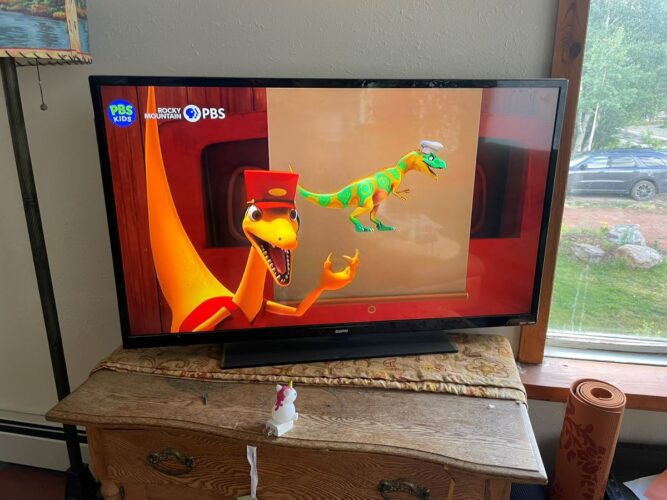
Suddenly, every rock is a fossil in disguise. West now differentiates between plant-eaters and meat-eaters while tromping down the trail. - Ada Twist, Scientist
This one made “why?” the most common word in our house. The best part? It frames curiosity as a superpower, not an annoyance. Now our backyard is full of rotting log experiments and insect investigations.
Turning Screen Time Into Adventure Time
The goal isn’t perfection. Some days, your kids might watch a show that’s just silly and fun, and that’s okay. Other days, the right storyline can turn into hours of inspired play—digging in the dirt, pretending to be explorers, or asking questions that stretch your own imagination.
Screen-intentional parenting is about making conscious choices instead of default ones. It’s about using screens as a bridge to curiosity, not a replacement for it.
Because at the end of the day, it’s not about the number of minutes logged—it’s about the seeds planted.
Your Turn
Do you have a show that sparks play, adventure, or learning in your home? Drop it in the comments… we’re always looking for new additions to the “approved with purpose” list.